Best Time for Abisko Northern Lights
The best time for Abisko northern lights is September to March. Pick late September–October or February–March for milder nights and daylight for other plans; pick December–January for the longest darkness.
Go between September and March and stay three or more nights; the month changes the cold and the daylight more than your chances.
- Clouds decide more nights than the month does.
- Darkest: polar night from about 6 Dec to 6 Jan.
- Coldest: January, with night lows around −15 °C.
Best Time for Abisko Northern Lights, Month by Month
Darkness grows from about 6.5 h without sun in mid-August to a full polar night in December, then shrinks to about 8.5 h by mid-April. Night lows follow, from +3 °C in September to −15 °C in January. Choose a month.
Darkness returns late in the month, and the first auroras can show from late August on clear nights.
Mild nights around +3 °C, autumn colors and an unfrozen lake that can mirror the lights. Nights already last about 11 h.
Nights grow fast — about 15 h without sun by mid-month — while lows stay near −2 °C. A comfortable month for long waits outside.
Darkness deepens towards the polar night, with lows around −7 °C and under 5 h of daylight by mid-month.
Polar night from about 6 December: the sun stays below the horizon, and around 5 h of blue twilight light the middle of the day. Lows near −10 °C.
The coldest month, with night lows around −15 °C. The sun returns around 6 January, but days stay short, so the dark hours are long.
Still deep winter at about −14 °C, but daylight is back to some 7.5 h — time for park walks or huskies between night tours.
Milder nights around −10 °C and days longer than nights by the equinox, when auroral activity tends to run a little higher.
Early April can still bring the lights; by mid-month the sun is down for only about 8.5 h and twilight fills most of it.
Pick the Best Time for Abisko Northern Lights by What Matters
Choose the month by what else you want from the trip: mild nights and open water, the longest darkness, or snow and daylight for husky walks and snowshoes.
Abisko Northern Lights September — Best Time for Lake Reflections
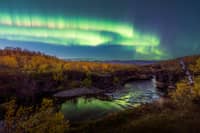
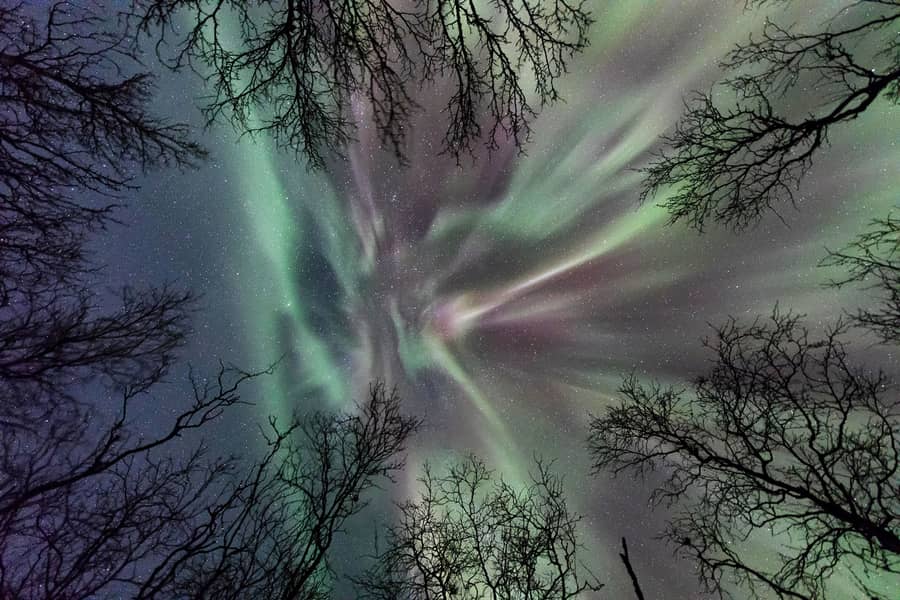
September is the gentlest start: lows around +3 °C, about 11 h without sun by mid-month, and an unfrozen Torneträsk that can mirror the lights. Autumn colors fill the birch forest.
Abisko Northern Lights Autumn — Best Time for Mild Waits Outside
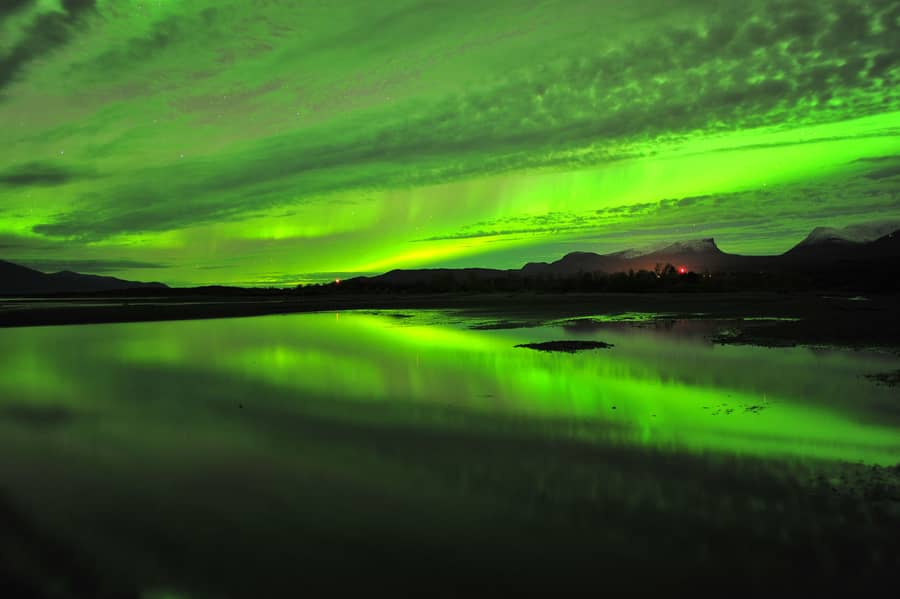
October brings long nights — about 15 h without sun by mid-month — while lows stay near −2 °C, so standing outside for an hour is still comfortable. It is the last month before deep cold.
Abisko Northern Lights November — Best Time for Long Dark Evenings
November darkens fast: under 5 h of daylight by mid-month and lows around −7 °C. The sun sets so early that evening tours start in full darkness.
Abisko Northern Lights Winter — Best Time for the Most Darkness
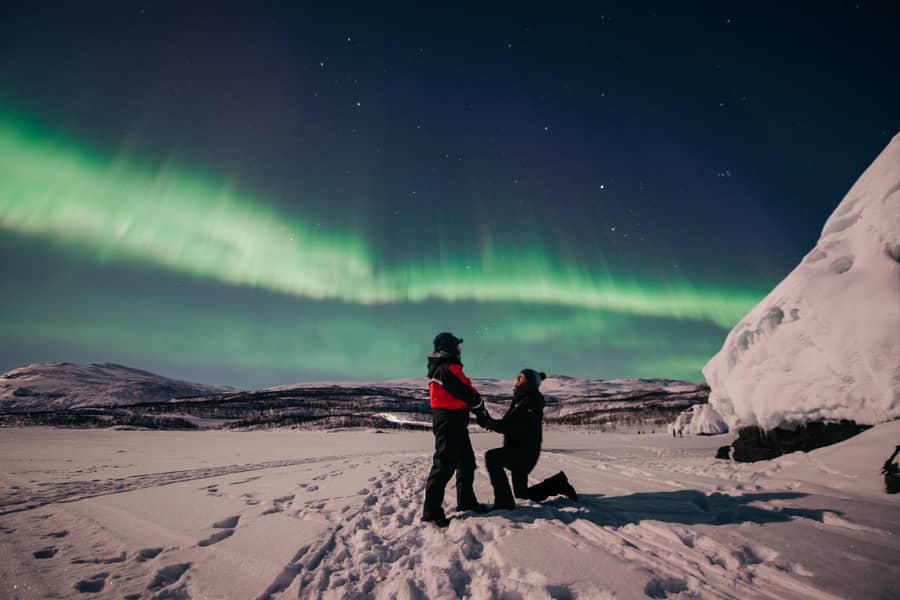
December and January are the darkest months: polar night from about 6 December to 6 January, with roughly 5 h of blue twilight at midday. They are also the coldest, with lows near −10 to −15 °C.
Abisko Northern Lights February — Best Time for Snow and Daylight
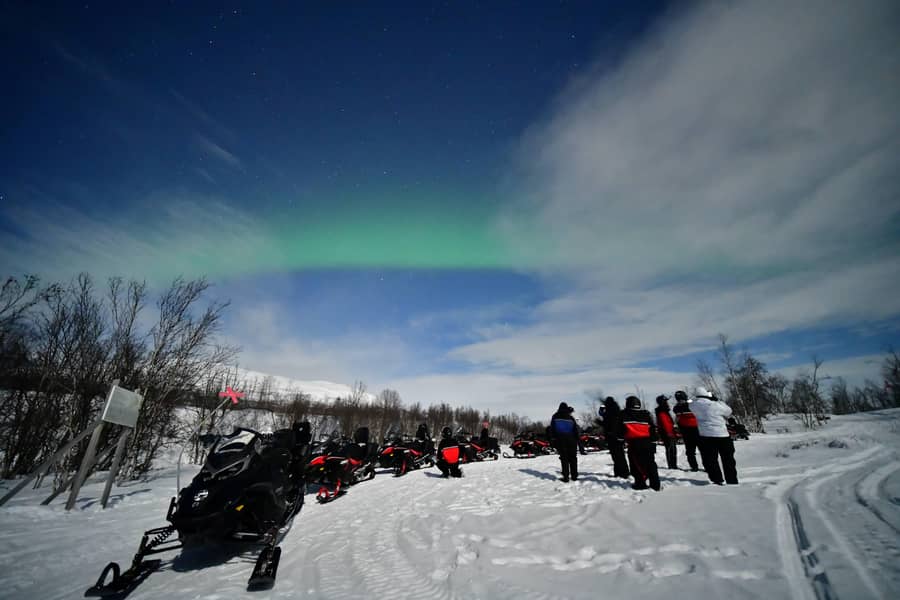
February keeps deep-winter nights, with lows near −14 °C, but gives back about 7.5 h of daylight by mid-month — time for husky walks or the national park before a night tour.
Abisko Northern Lights March — Best Time for Milder Snow Nights
March is milder at around −10 °C, with days longer than nights by the equinox and auroral activity that tends to run a little higher around it. Snow still covers the forest for snowshoe walks.
When It Is Not the Best Time for Abisko Northern Lights
From late May to mid-July the midnight sun keeps the sky bright all night, and April and August have only short, twilight-filled nights. Come between September and March instead.
What is the best month for Abisko northern lights?
No single month wins; September to March all work. Pick late September–October or February–March for milder nights, December–January for the most darkness.
Can you see the northern lights in Abisko in September?
Yes. Dark nights return in late August, and by mid-September there are about 11 h without sun.
Is Abisko dark all day in December?
The sun does not rise from about 6 December to 6 January, but around 5 h of blue twilight light the middle of the day.
How cold is Abisko in winter?
Average night lows are about −10 °C in December, −15 °C in January and −14 °C in February.
Can you see the lights in April?
Early in the month, sometimes; by mid-April twilight fills most of the short night.
Does the month change my chances?
Less than the weather does. Clouds decide most nights, so stay three or more nights in any season month.